Building a legacy through practice change
Every farm is different, but most growers share a common goal: leaving their land and business in a stronger position for the future.
With funding from the Queensland Department of the Environment, Tourism, Science and Innovation (DETSI), Queensland Fruit & Vegetable Growers’ (QFVG) is delivering the Southeast Queensland Horticultural Best Management Practice (SEQ Hort BMP) Incentive Program to support growers across the SEQ region.
With a focus on the Bremer, Lockyer, and Pumicestone catchments, growers have the opportunity to implement practical changes that address challenges specific to their operations while delivering lasting benefits for crop health, yields, and water quality.
Projects can focus on enhanced soil management, pesticide and nutrient management, and erosion and sediment control, with growers selecting solutions that best suit the needs of their businesses.
Following the success of previous incentive programs from 2022 - 2025, DETSI has expanded support, with grants of up to $30,000 now available to eligible growers.
Program manager Tim Wolens, said the Program will work with growers across every step of practice change on their farms.
“Working with the SEQ Hort BMP Incentive Program gives growers access to tailored on-farm support, help to identify opportunities and links with the technical expertise needed to enact practice change,” Tim said.
The following case studies highlight how growers have used previous rounds of incentive grants to support improvements on their farms.
Erosion and sediment control
Jackson Agricultural Company — Glasshouse Mountains - Macadamias
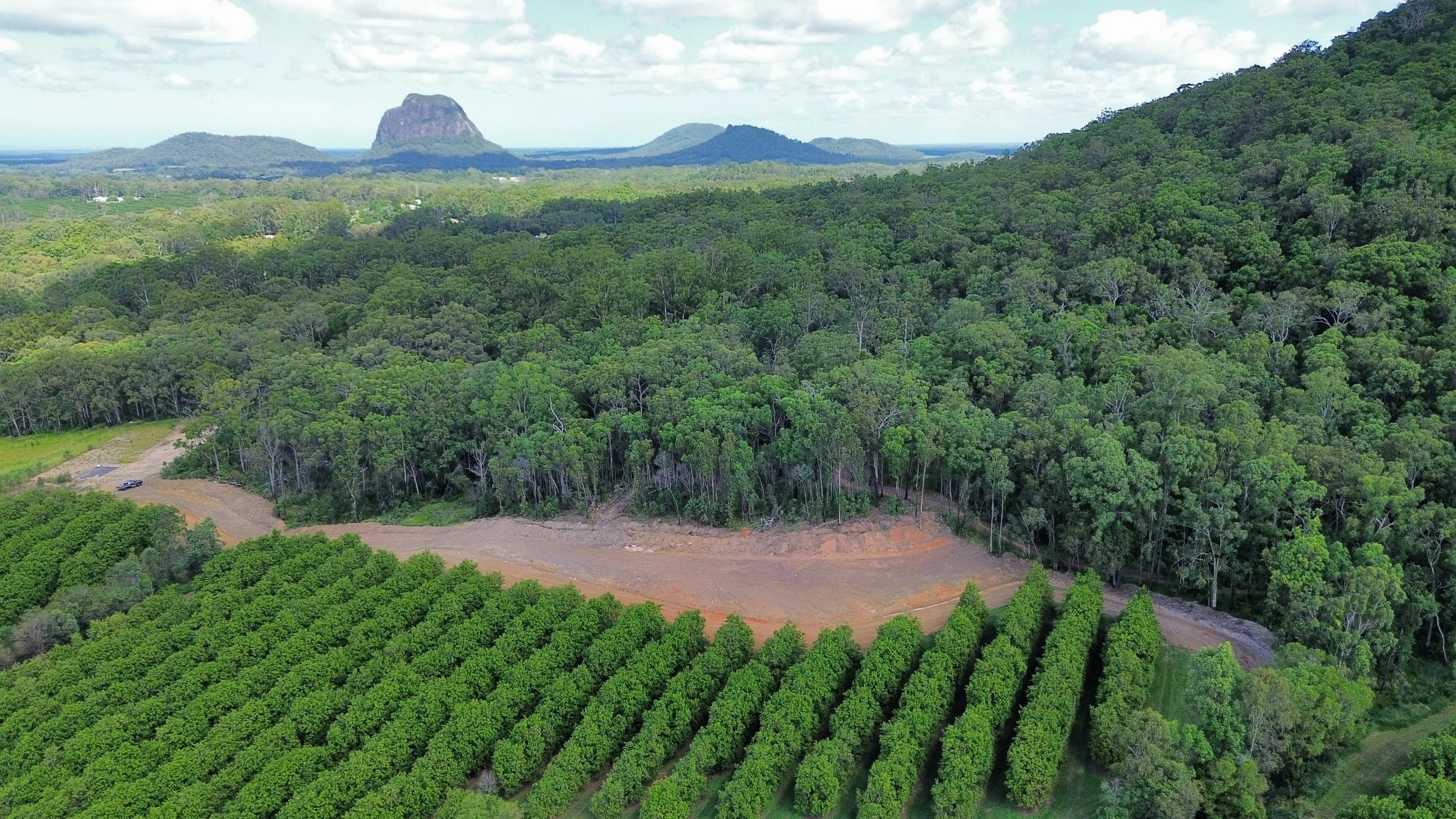
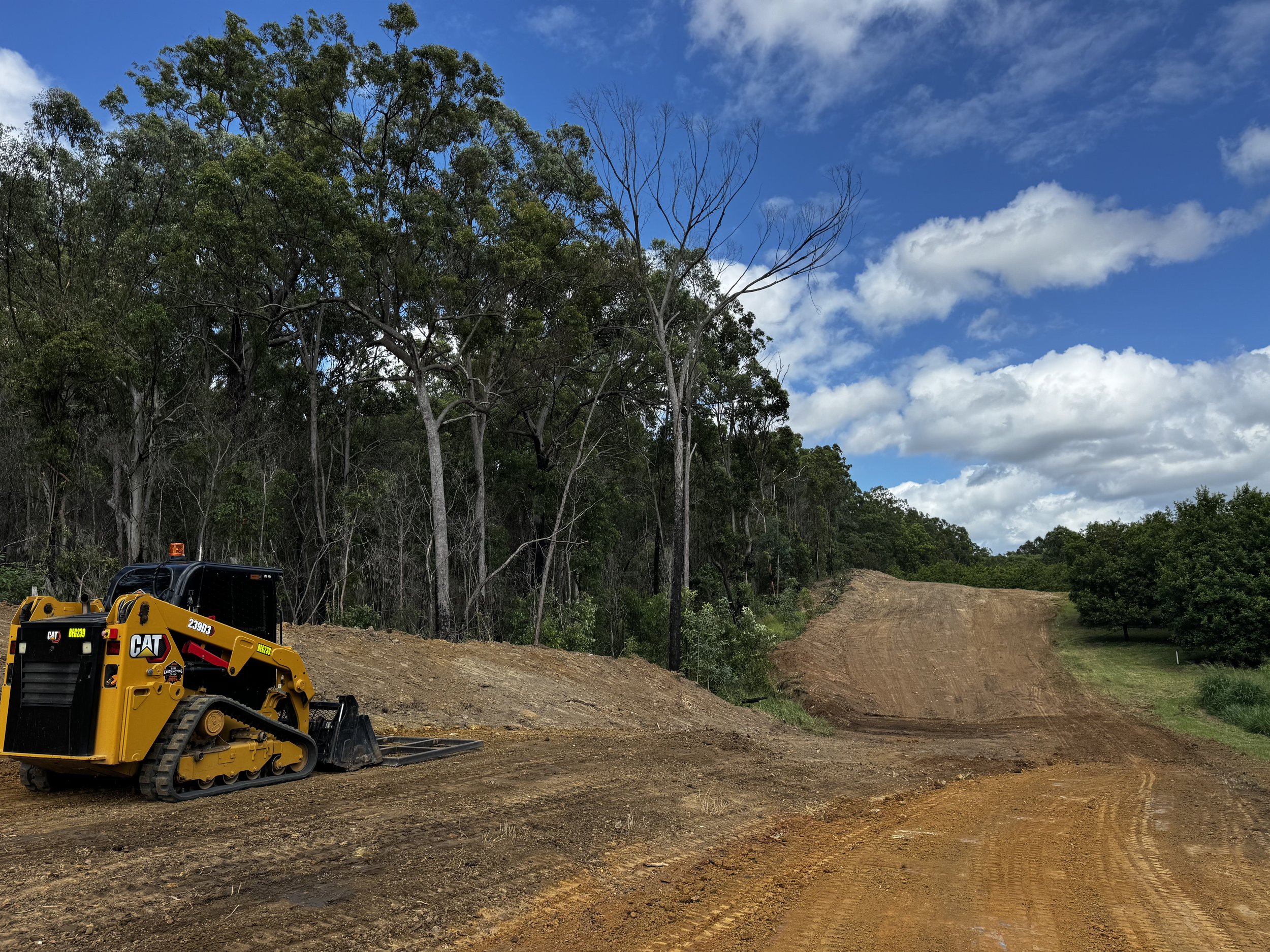
Significant rainfall events from three years of consecutive wet summers in SEQ took their toll on Daniel and Angela Jackson’s macadamia orchard. Uncontrolled surface flow coming from Mount Coonowrin flowed across the orchard. This took topsoil, mulch, and fertiliser away from the trees while carving ruts and channels throughout the farm.
Not only was this removing valuable inputs from the farm, potentially impacting nearby Back Creek, it created difficulties for their pinwheel harvester to collect the farm’s crop.
Working with QFVG and local contractors, the Jacksons were able to completely transform the edge of the property that neighbours the mountain.
The sheer drop was reshaped into contour banks that now direct rainfall safely from Mount Coonowrin into the farm’s existing drainage lines.
This specialist intervention has reduced erosion and runoff, while ensuring the Jacksons can harvest their macadamia crop efficiently and safely.
Piñata Farms - Wamuran - Pineapples
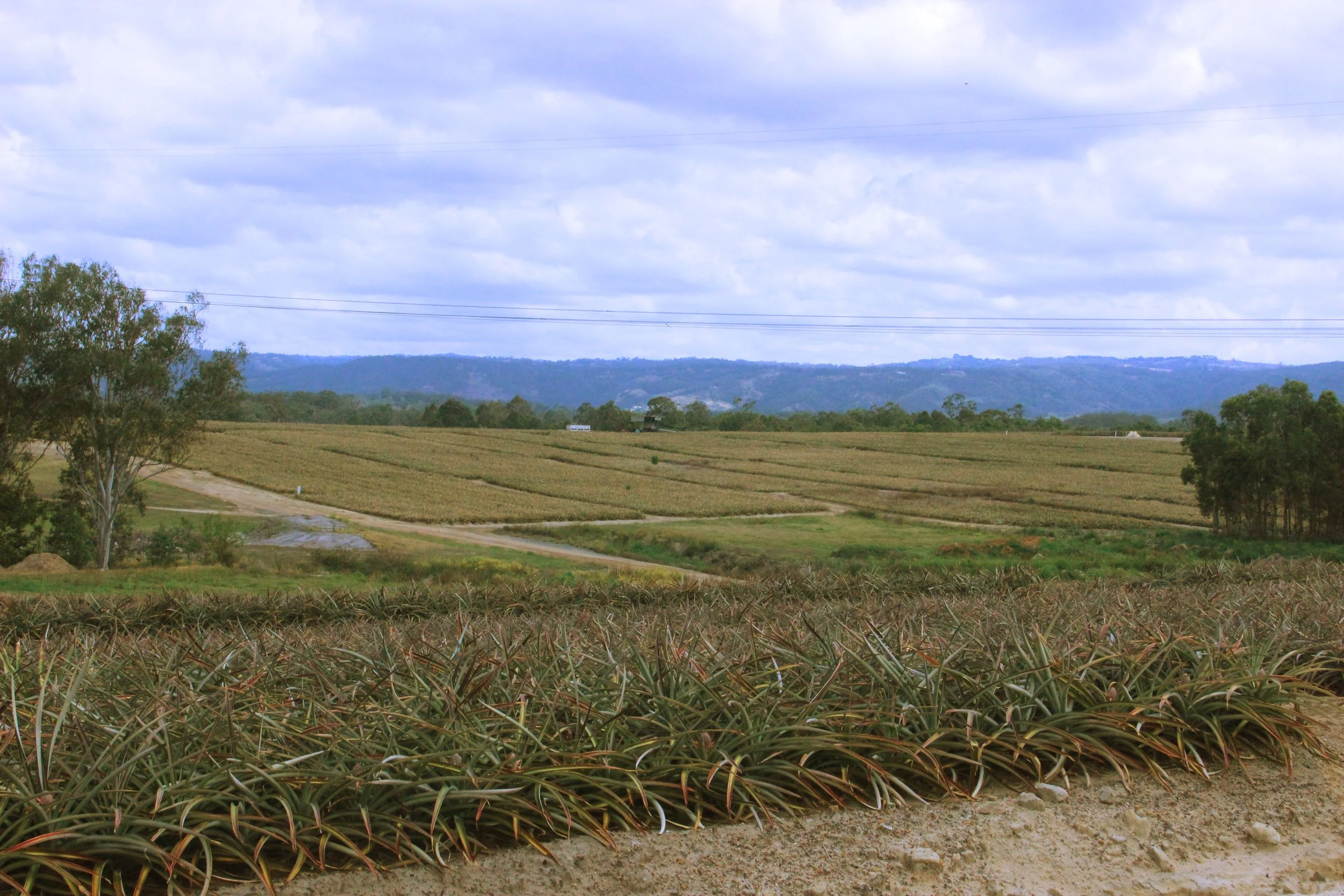
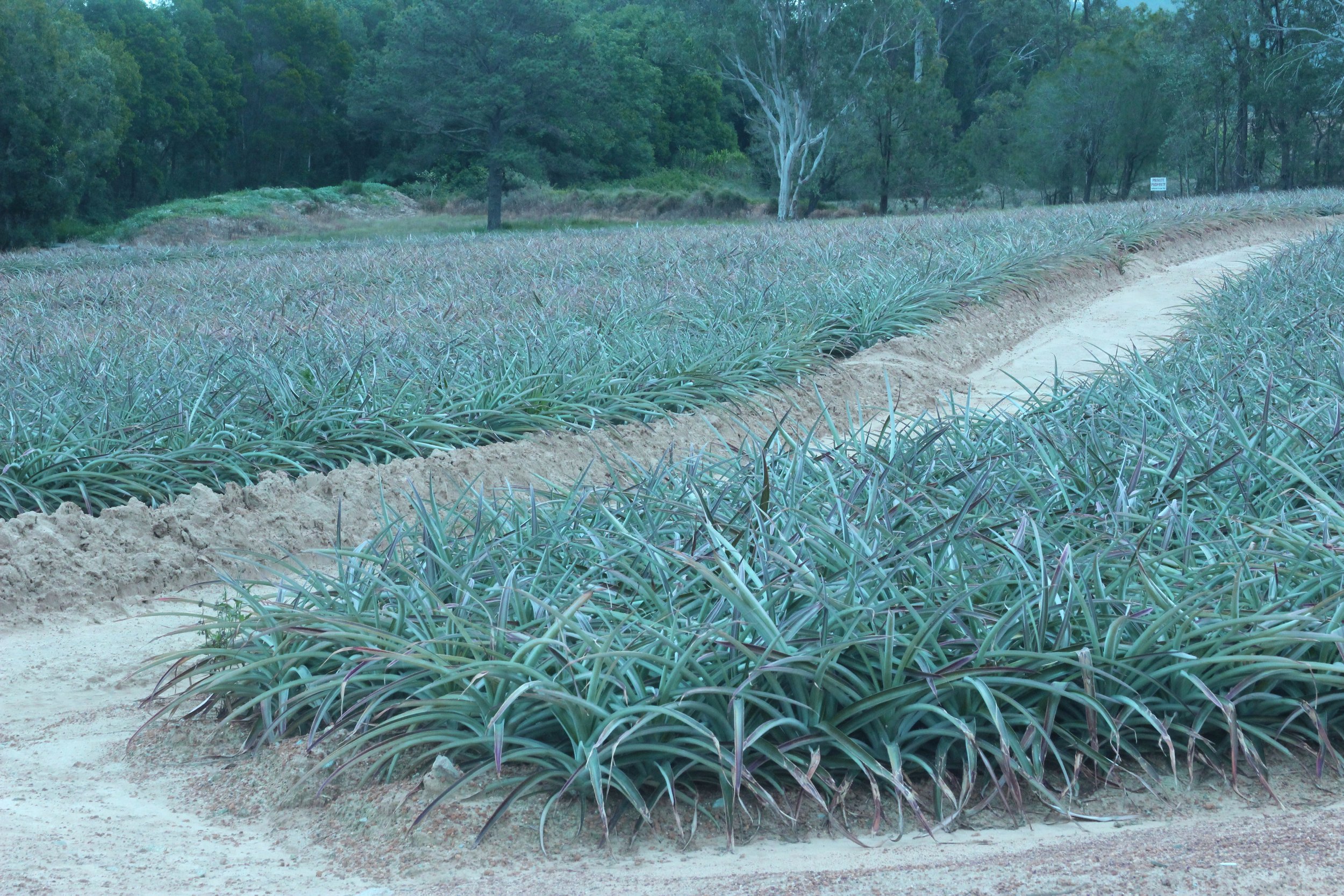
Having grown pineapples on their Wamuran property for 50 years, Gavin Scurr of Piñata Farms is focused on ensuring his family can do so for at least 50 more.
As pineapples thrive in sandy soil, the plantations can be prone to erosion. However, working with the Program enabled the Scurrs to more effectively control movement water on the property with the installation of contour drains and stabilisation of drainage lines, keeping soil and inputs where they’re needed on the pineapple crop.
Soil management (including soil health)
Rieck Farming - Kalbar - Vegetables
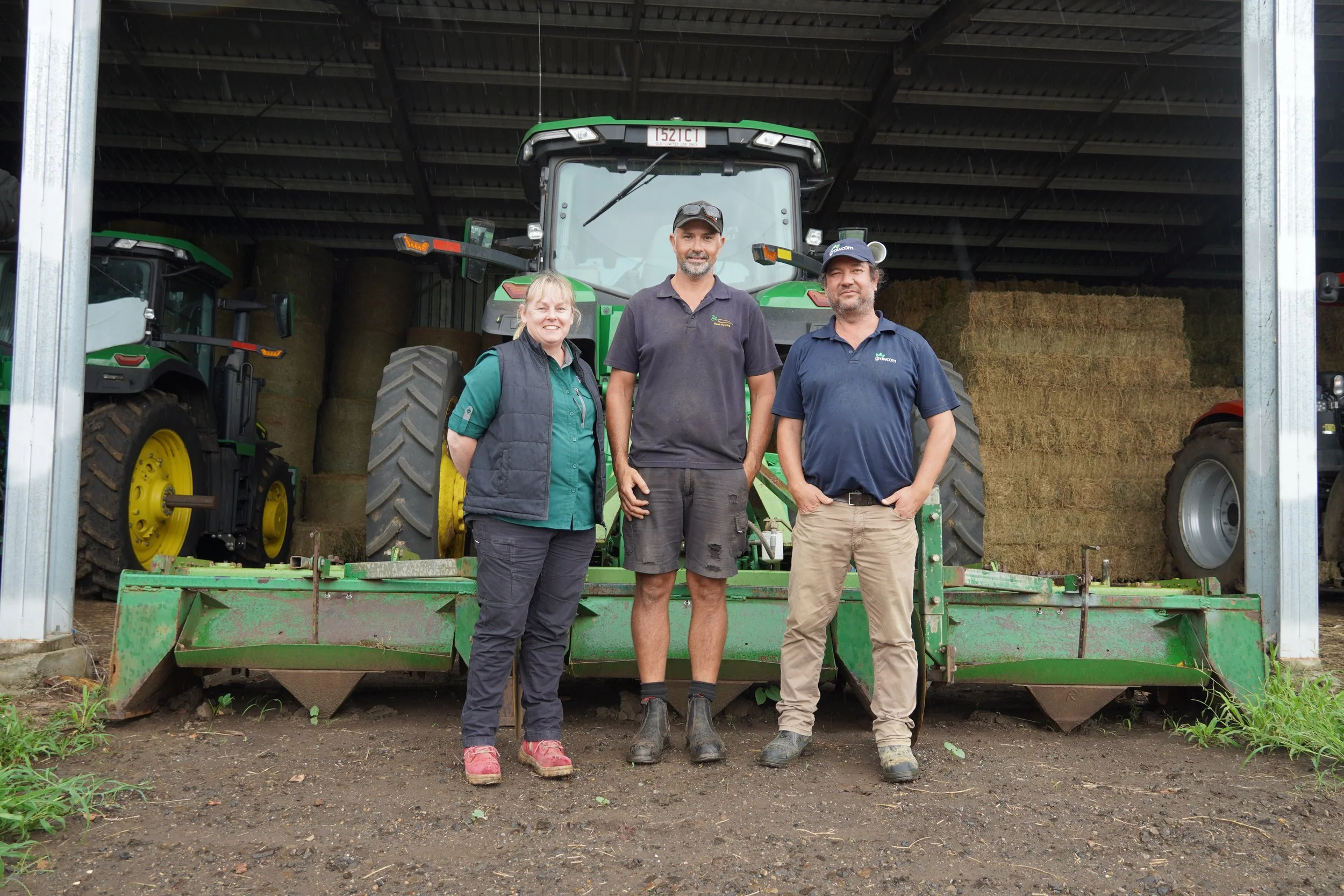
Mick Rieck (centre) has implemented precision cover-cropping in his inter-rows with incentive grant funding helping to customise his existing fertiliser hopper.
Mick Rieck’s family have tended vegetables on the same patch of Kalbar land for generations. He knows all too well that the rich alluvial deposits that support his vegetable rotation are at the mercy of the elements if he isn’t proactive about protecting the soil.
Mick has implemented an innovative approach to precision cover cropping practices to keep soil on-farm during rainfall events.
Rather than buying a separate seeding unit, engaging with the SEQ Water Quality Team enabled Mick to install a six-line manifold seeder to his tractor. This allowed him to use his existing fertiliser hopper to plant the cover crop in the inter-rows while maintaining clean hills to plant his carrots into.
Mick said he observed a significant amount of wash on blocks that don’t have the cover crop in the inter-row. There was approximately a 50-60 percent reduction in soil movement from beds with the vetch. The adoption of this practice change means Mick has substantially reduced the movement of soil off his farm and reduced costs.
Angus Stainlay - Aratula - Vegetables
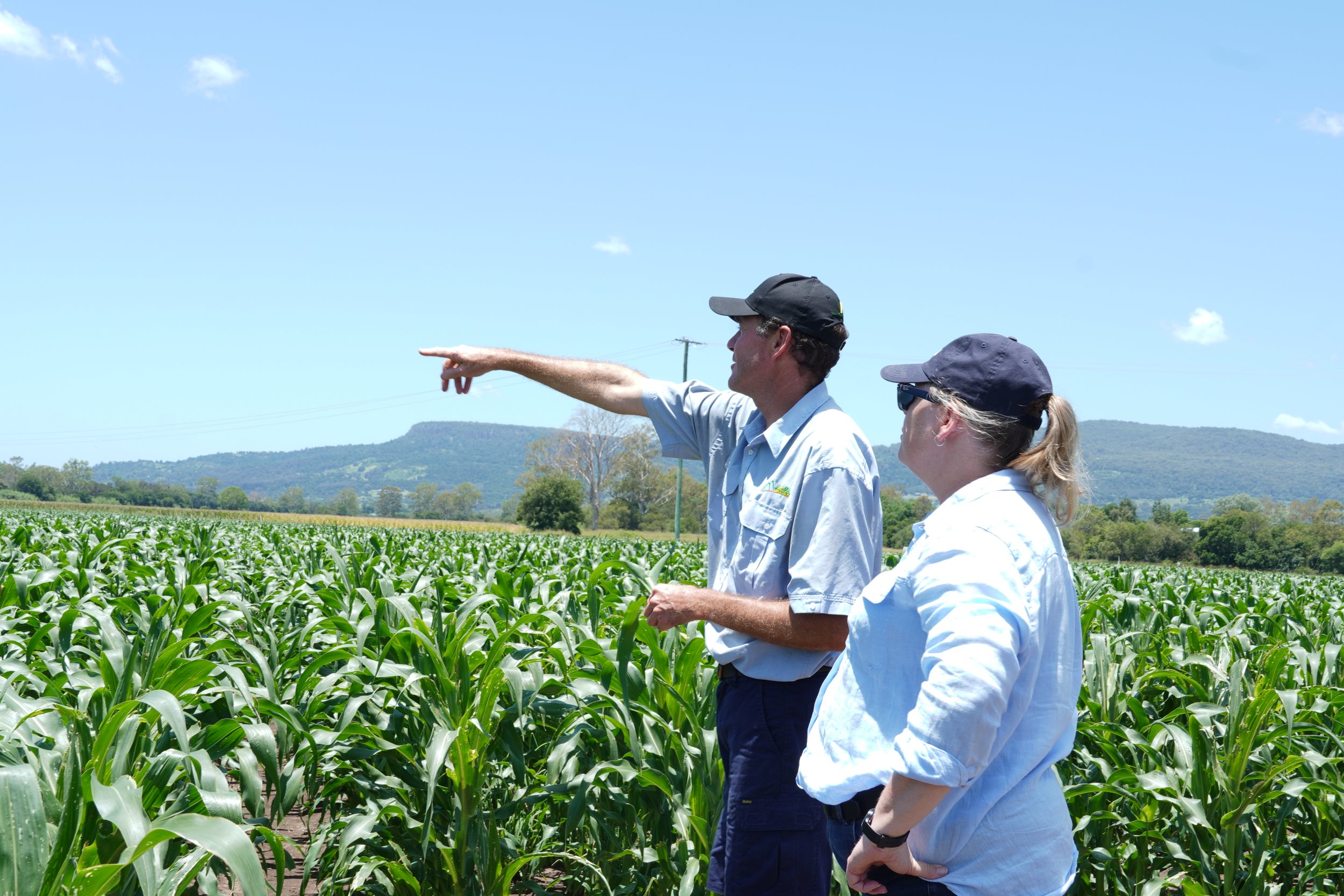
Angus wanted to maximise his soil health, turning to compost to enrich his vegetable blocks.
Angus Stainlay was looking to maximise benefits to his vegetable crops, knowing he only gets a 60-to-70-day window to nurture them before harvest. He’d noticed some decline in his soil health and turned to a compost trial to make his farm more resilient to the effects of weather and minimise the need for nutrient and pesticide inputs.
Support from SEQ Water Quality Team enabled Angus to undertake a rate trial of compost, enabling him to proactively address his farm’s soil health. Monitoring results indicated a positive effect on soil biology, increased soil organic matter and nutrient levels.
Pesticide and nutrient management
Kengoon Farming - Kalbar - Vegetables
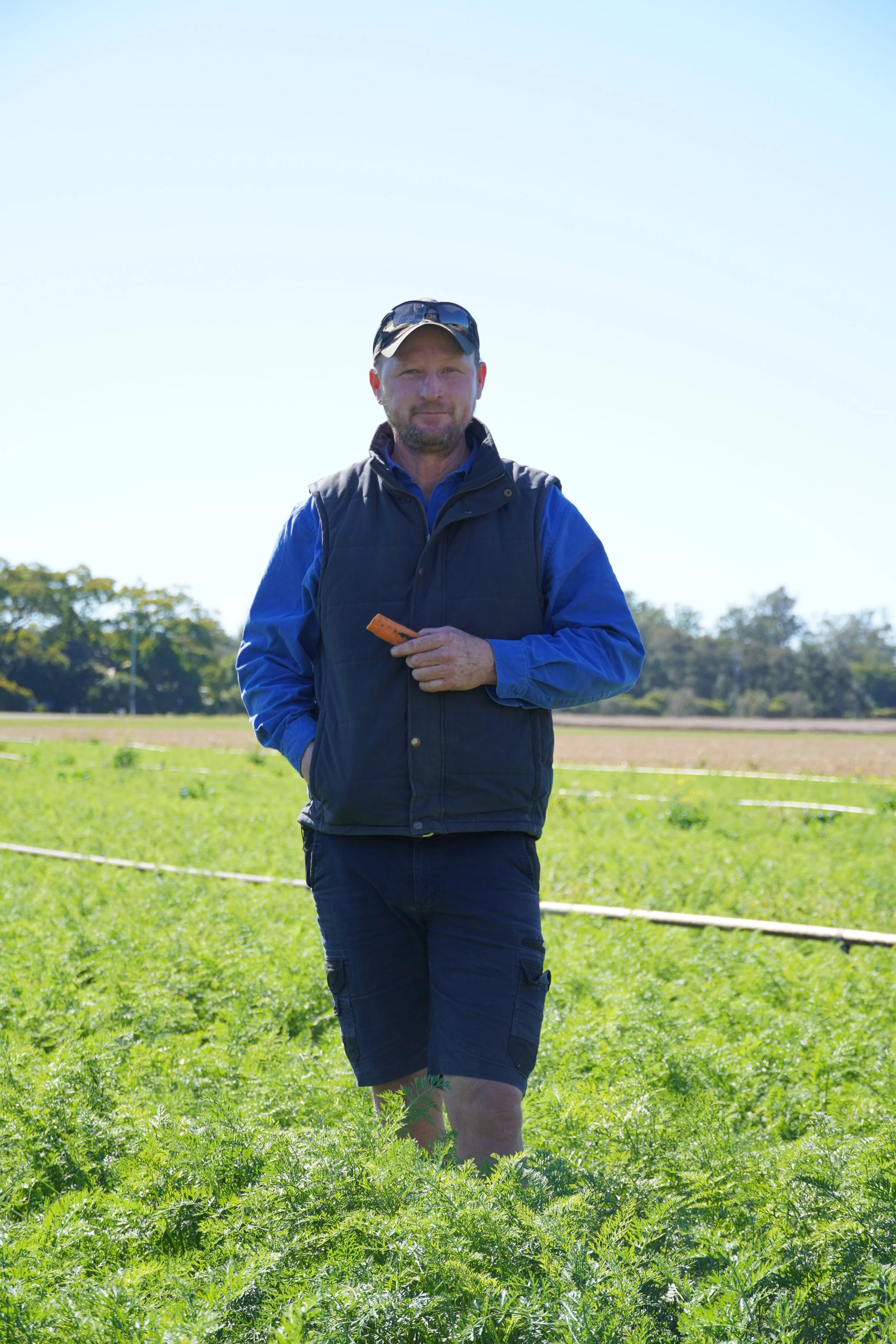
Ed Windley is already seeing improved crop health thanks to his new precision spraying approaches.
Precision spraying technologies offer a range of positive outcomes for farmers, crops, and the environment. Kalbar vegetable farmer Ed Windley is enjoying these benefits thanks to assistance from the SEQ Water Quality Team that aided in purchasing an automatic spray rate controller with section control for his boom sprayer.
Previously, some of his crop would be double sprayed at the end of blocks where boom sprayer operations overlapped. Over twelve months since the implementation of this practice change. Ed said he has observed significant improvements in reducing the volume of pesticides applied, savings in time, reductions in cost and minimised any impact the farm may have on the surrounding waterways.
If you would like to learn more about the Southeast Queensland Horticultural Best Management Practice (SEQ Hort BMP) Incentive Program reach out to the team today.